This website contains imagery that is only suitable for audiences 18+. Any surgical or invasive procedure carries risks.
Lipomodelling—also called autologous fat transfer or fat grafting—is a surgical technique that uses a person’s own fat to adjust volume and contour in selected areas of the body. Fat is typically collected from a donor area (such as the abdomen, flanks, or thighs) and then transferred to a recipient area where additional volume or soft-tissue correction may be clinically appropriate. This procedure is not a weight-loss treatment and outcomes vary between individuals.
Lipomodelling is generally performed in stages within the one operation:
– Fat harvesting using liposuction from a donor site.
– Processing of the harvested fat to prepare it for transfer.
– Fat transfer where the prepared fat is injected in small amounts into the recipient area to support contour or volume goals agreed during consultation.
The exact technique and plan depend on anatomy, the treatment area, and safety considerations.
Potential benefits depend on the indication and the surgical plan. Lipomodelling may offer:
– Use of your own tissue rather than an implant or filler material (where appropriate)
– Targeted contour change in the recipient area (results vary)
– Donor area contour change from the fat harvesting process (not a substitute for weight loss)
– Soft-tissue correction in selected cases (for example, contour irregularities)
No specific outcome can be guaranteed. A portion of transferred fat may not persist long-term, and sometimes more than one procedure is required.
A suitable candidate is typically an adult who:
– Is in good overall health and able to undergo surgery and anaesthesia (where required)
– Has adequate donor fat available for harvesting
– Understands the limitations of fat transfer, including variability in how much fat remains over time
– Has realistic expectations and can commit to post-operative care and follow-up
– A consultation is required to assess suitability, explain alternatives, and discuss likely risks and recovery.
You May Be a Good Candidate If
You may be a good candidate for lipomodelling if you:
– Are medically fit for surgery and healing
– Have stable weight for a period advised by your surgeon
– Have enough donor fat to safely harvest
– Are seeking subtle to moderate contour or volume adjustment (depending on area)
– Do not smoke/vape or are willing to stop nicotine use for the recommended period
– Understand that results vary and revision or staged treatment may sometimes be recommended
Lipomodelling may not be appropriate if you:
– Have an active infection or untreated medical condition that increases surgical risk
– Have significant health issues that impair healing or circulation
– Are unable to stop nicotine use where clinically required
– Do not have sufficient donor fat for the intended plan
– Have expectations that are not achievable with fat transfer alone, or where surgery is unlikely to address the underlying concern
Technique is tailored to the treatment area and safety requirements. In general, lipomodelling involves:
– Low-trauma fat harvesting from the donor area
– Processing to prepare fat for transfer (methods vary by surgeon and clinical context)
– Careful placement of small volumes across multiple tissue planes in the recipient area to support integration and reduce irregularities
Your surgeon will explain where fat may be harvested and transferred, whether staging is recommended, and what trade-offs apply (including scarring, contour irregularity risk, and variability in fat “take”).
Anesthesia
Depending on the areas treated and the volume transferred, lipomodelling may be performed under general anaesthesia or local anaesthesia with sedation. The appropriate option is determined during consultation based on procedure extent, patient factors, and facility requirements.
Your surgical team will provide individual instructions. Common considerations include:
– Medication review (including medicines/supplements that may increase bleeding risk)
– Nicotine cessation where required to reduce complication risk and support healing
– Health optimisation (e.g., managing iron, nutrition, and underlying medical conditions)
– Planning support at home for the first 24–48 hours after discharge
– Fasting instructions if sedation or general anaesthesia is planned
Return to Work: commonly depends on procedure extent, discomfort and the type of work. Many people with desk-based roles return within about 7–10 days, but this varies.
Return to Exercise: light walking is often encouraged early; higher-intensity exercise and lifting are typically restricted for around 4–6 weeks or until cleared.
Assessing longer-term outcome: fat retention varies, and assessment is often made at around 3–6 months (sometimes longer), once swelling has settled.
The outcomes shown are only relevant for this patient and do not necessarily reflect the results other patients may experience, as results may vary due to many factors including the individual’s genetics, diet and exercise.
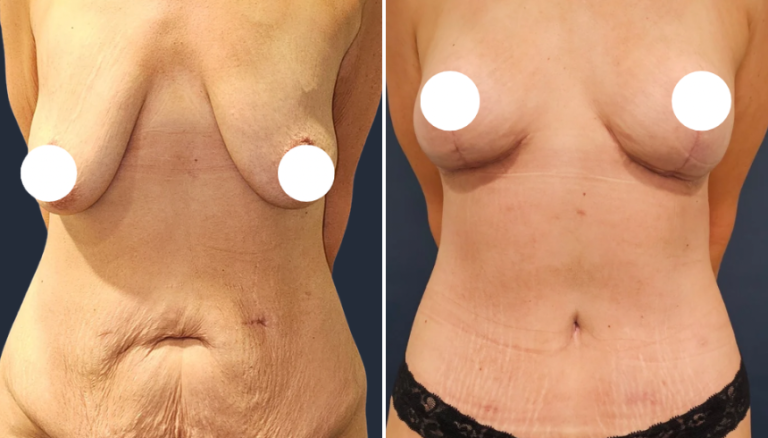
Procedure: Abdominoplasty, Breast Lift
Recovery Timeline: 3 Months