
This website contains imagery that is only suitable for audiences 18+. Any surgical or invasive procedure carries risks.
Labiaplasty is a surgical procedure that alters the size and/or shape of the labia minora (inner labial folds) and, in selected cases, may involve the labia majora (outer labial folds). People seek assessment for a range of reasons, including physical symptoms (such as irritation or friction) or concerns about appearance. It’s important to note that labial anatomy varies widely and is often normal. A consultation is required to confirm whether surgery is appropriate, discuss alternatives, and explain expected limitations, scarring, risks, recovery, and costs.
Labiaplasty typically involves reshaping and reducing a portion of labial tissue while aiming to preserve function and minimise disruption to sensitive structures. The procedure may be performed as a standalone operation or, less commonly, alongside other procedures depending on individual circumstances. Treatment planning is personalised and based on anatomy, symptom history (if applicable), tissue quality, and safety considerations. Outcomes vary and no specific result can be guaranteed.
The goals of labiaplasty depend on the individual and the surgical plan. Potential outcomes may include:
– Reduction in tissue prominence in selected areas (where clinically appropriate)
– Change in the contour and symmetry of the labia (noting that natural asymmetry is common)
– Possible reduction in friction-related irritation in some cases (this cannot be guaranteed and depends on underlying causes)
– Improved comfort with certain clothing or activities in some patients (varies)
These outcomes are not guaranteed and depend on individual anatomy, healing, and the reason for surgery.
A suitable candidate is typically an adult in good overall health who is seeking assessment for either functional symptoms or anatomy-related concerns and who understands that:
– genital appearance varies widely and is often normal
– surgery results in scars and may change sensation
– outcomes vary and revision may occasionally be required
– psychological wellbeing and expectations are important to assess as part of safe care
A consultation is required to assess suitability, provide informed consent, and discuss risks and alternatives.
You May Be a Good Candidate If
You may be a good candidate for labiaplasty if you:
– Are in good overall physical health
– Have concerns you’d like assessed (e.g., friction/irritation, or anatomy-related concerns)
– Have stable general health and can follow post-operative care instructions
– Do not smoke/vape or are willing to cease nicotine use for a specified period before and after surgery (as directed)
– Understand that outcomes vary and scarring is part of surgery
– Have realistic expectations based on your anatomy and the surgical plan
Labiaplasty may not be suitable for individuals who:
– Have an active infection or untreated dermatological condition affecting the vulval area
– Have medical conditions that significantly increase surgical risk or impair healing
– Are unable to stop nicotine use where clinically required
– Are pregnant or in the immediate post-partum period (assessment required)
– Have expectations that are not achievable surgically, or where surgery is unlikely to address the underlying concern
– Have unmanaged body image distress or related psychological concerns that require further assessment before proceeding
The technique is selected based on anatomy, tissue characteristics, and surgical goals. Common approaches include:
– Trim (edge resection): reshapes the labial edge by removing a strip of tissue along the border in a controlled manner.
– Wedge resection: removes a V-shaped section from the central portion of the labia, aiming to preserve the natural edge in selected cases.
– Adjunctive contouring: in some cases, additional limited reshaping may be discussed (e.g., addressing asymmetry), but suitability varies.
Your surgeon will explain the recommended approach, expected scarring pattern, and trade-offs (including potential sensation changes and risk of wound issues).
Anesthesia
Labiaplasty may be performed under local anaesthesia with sedation or general anaesthesia, depending on the extent of surgery, patient factors, and facility requirements. The anaesthesia plan and associated risks will be discussed during consultation.
Pre-operative instructions vary, but commonly include:
– Medication review: guidance on medicines/supplements that may increase bleeding risk (where clinically appropriate)
– Nicotine cessation: nicotine can impair healing and increase complication risk
– Hygiene and skin care plan: to reduce infection risk
– Planning time off and support: arrange transport and support after discharge
– Fasting instructions: if sedation or general anaesthesia is planned
Return to Work: depends on discomfort levels and the type of work. Your surgeon will guide you.
Return to Exercise: typically staged; activities that create friction/pressure may need to be avoided for a period determined by your surgeon.
Appearance over time: swelling and sensitivity can take weeks to months to settle; timelines vary.
The outcomes shown are only relevant for this patient and do not necessarily reflect the results other patients may experience, as results may vary due to many factors including the individual’s genetics, diet and exercise.
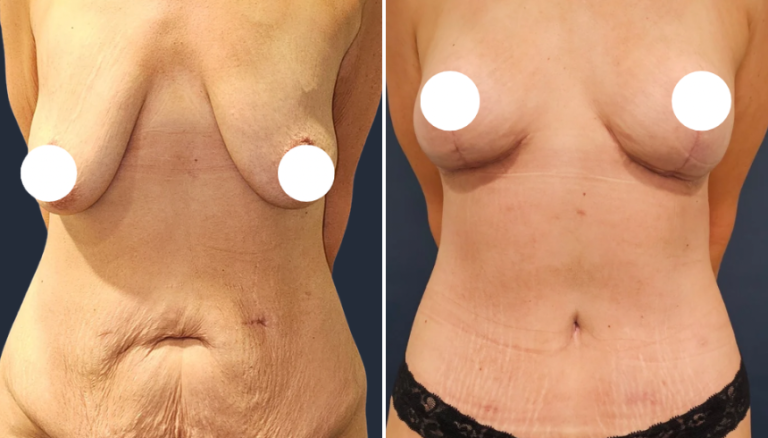
Procedure: Abdominoplasty, Breast Lift
Recovery Timeline: 3 Months