
This website contains imagery that is only suitable for audiences 18+. Any surgical or invasive procedure carries risks.
A belt lipectomy (also called a lower body lift or circumferential body lift) is a major surgical procedure that addresses excess skin and soft tissue around the entire lower torso—typically the abdomen, flanks/hips, lower back and, in some cases, the buttock region. It is most commonly considered after significant weight loss when skin laxity causes functional concerns (such as recurrent irritation) and/or when a person is seeking improvement in overall contour. Outcomes vary and a consultation is required to determine suitability.
Belt lipectomy involves the circumferential removal of a band of excess skin and fatty tissue around the lower trunk. The remaining tissues are then repositioned and secured to improve contour and reduce skin folds. The procedure may be recommended when excess skin is present not only at the front of the abdomen but also around the sides and back. It is not a weight-loss procedure and it results in a permanent scar.
Potential benefits depend on individual anatomy and surgical planning. They may include:
– Reduction of excess skin and skin folds around the lower abdomen, hips and lower back
– Improved contour of the lower trunk (front and back), which may improve clothing fit for some patients
– Relief of skin-related symptoms in selected patients, such as recurrent irritation, chafing or hygiene difficulty within skin folds
– Support of mobility and comfort where excess tissue interferes with movement or exercise
No specific result can be guaranteed. A detailed discussion about likely outcomes and trade-offs (including scarring) forms part of informed consent.
A suitable candidate is typically an adult who:
– Has achieved stable weight after significant weight loss (timeframe varies and is assessed individually)
– Has circumferential skin laxity affecting the abdomen, flanks and lower back
– Is medically fit for major surgery and recovery
– Does not smoke/vape or is able to stop nicotine use for the required period
– Understands that the procedure involves substantial recovery and permanent scarring, and has realistic expectations
You May Be a Good Candidate If
You may be a good candidate if you:
– Have maintained a stable weight for a period advised by your surgeon
– Are bothered by loose, hanging skin around the abdomen, hips and back
– Experience recurrent skin irritation or hygiene difficulties within skin folds (where present)
– Are in good overall health and can follow post-operative instructions
– Are willing to stop nicotine use as required to reduce complication risk
Belt lipectomy may not be appropriate if you:
– Have significant ongoing weight fluctuation or plan major weight changes
– Are unable to stop nicotine use where clinically required
– Have uncontrolled medical conditions that increase surgical risk (e.g., poorly controlled diabetes or significant cardiovascular disease)
– Have active infection or other issues that may impair healing
– Have expectations that are not achievable with surgery, or where surgery is unlikely to address the underlying concern
Belt lipectomy is tailored to the distribution of excess skin and tissue. In general, it involves:
– A continuous incision around the lower torso, usually positioned to sit under underwear/swimwear where possible
– Elevation and tightening of tissues of the abdomen, flanks and lower back
– Removal of excess skin and closure designed to reduce skin folds and improve contour
– Liposuction may be used in selected cases to refine contour, depending on safety and tissue quality
Your surgeon will explain the proposed incision placement, what areas are likely to change, and what scars to expect.
Anesthesia
Belt lipectomy is typically performed under general anaesthesia in an appropriately licensed facility or hospital setting, with anaesthesia administered and monitored by a qualified anaesthesia clinician.
You will be given individual instructions. Common requirements may include:
– Medication review, including medicines/supplements that can increase bleeding risk
– Nicotine cessation for the recommended period before and after surgery
– Medical clearances and, where relevant, optimisation of nutrition and iron levels after weight loss
– Planning for post-operative support at home, transport, and time off work
– Fasting instructions prior to anaesthesia
Return to Work: desk-based work may be possible for some people in around 2–3 weeks, depending on the extent of surgery and recovery.
Return to Exercise: light walking is usually encouraged early; strenuous exercise and heavy lifting are commonly restricted for around 6–8 weeks or until cleared.
Assessing longer-term outcome: swelling and tissue settling can take months; contour is often assessed over 6–12 months.
The outcomes shown are only relevant for this patient and do not necessarily reflect the results other patients may experience, as results may vary due to many factors including the individual’s genetics, diet and exercise.
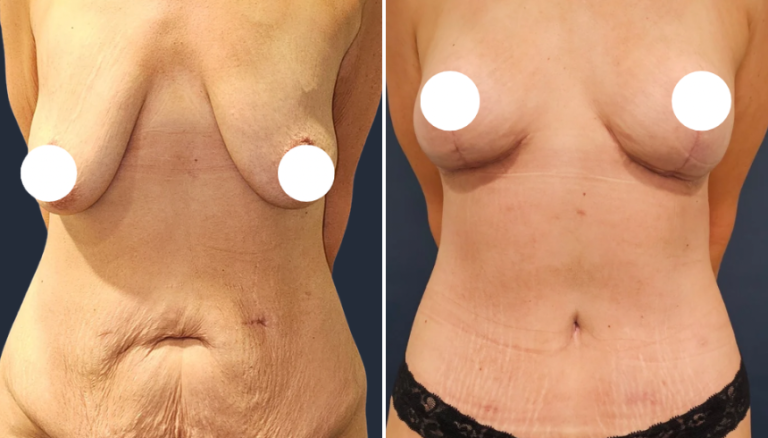
Procedure: Abdominoplasty, Breast Lift
Recovery Timeline: 3 Months