Breast augmentation (augmentation mammoplasty) is a surgical procedure that uses implants to change breast size and shape. Implants may be silicone or saline and may be placed under the breast tissue or partially/fully under the chest muscle, depending on individual anatomy and the surgical plan. A consultation is required to assess suitability, discuss expected changes and limitations, and provide information about risks, scarring, recovery, and alternatives.
Tuberous breast correction is a specialised surgical procedure that may be considered for people with tuberous (tubular) breast development, a congenital variation where breast shape and base width may develop differently. Surgical planning is individualised and may involve releasing constricting tissue at the breast base and reshaping breast tissue. Some cases may also involve implants and/or fat grafting, depending on anatomy and the treatment plan. A consultation is required to assess suitability and to discuss expected changes, limitations, risks, scarring, recovery, and alternatives.
Breast reduction surgery (reduction mammaplasty) is a surgical procedure that removes excess breast tissue and skin to reduce breast size and weight and reshape the breasts. It is often considered by people who experience physical symptoms associated with breast size, such as discomfort in the neck, shoulders, or back, or skin irritation beneath the breasts. A consultation is required to assess suitability, discuss expected changes and limitations, and provide information about risks, scarring, recovery, and alternatives.
A breast lift, also known as mastopexy, is a surgical procedure that repositions and reshapes breast tissue and may reposition the nipple and areola where clinically appropriate. It is commonly considered when breast position has changed over time due to factors such as ageing, pregnancy, breastfeeding, or weight changes. The procedure typically involves removing excess skin and adjusting underlying tissues. A consultation is required to assess suitability and to discuss expected changes, limitations, scarring, risks, recovery, and alternatives.
Breast implant removal and revision refers to surgical procedures performed to remove existing breast implants and, where appropriate, address concerns related to previous implant surgery. This may include issues such as capsular contracture, implant rupture/deflation, implant malposition, discomfort, or a preference to change implant size or proceed without implants. Surgical planning is individualised. A consultation is required to assess suitability and to discuss expected changes and limitations, scarring, risks, recovery, and alternative options.
Breast reconstruction after mastectomy is a surgical process that may be performed to recreate a breast mound following breast removal, which is commonly part of breast cancer management or risk-reduction surgery. Reconstruction planning is individualised and considers factors such as your anatomy, the type of mastectomy, overall health, and any current or planned cancer treatments (including radiotherapy). A consultation is required to discuss suitability, the stages of reconstruction, expected outcomes and limitations, risks, scarring, recovery, and alternatives.
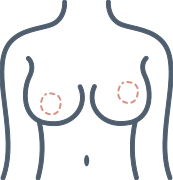
Nipple and areola surgery refers to procedures that may adjust the size, shape, position, or projection of the nipple and/or areola. It may be considered for concerns such as enlarged areolae, prominent or elongated nipples, asymmetry, or inverted nipples. Surgical planning is individualised. A consultation is required to assess suitability and to discuss expected changes and limitations, scarring, risks, recovery, and alternatives.
Gynaecomastia surgery (sometimes called male breast reduction) is a procedure that may be considered for the management of excess male breast tissue, which can involve glandular tissue, fatty tissue, or both. The aim is to reduce breast prominence and reshape the chest where clinically appropriate. A consultation is required to confirm the cause of breast enlargement, assess suitability, and discuss expected changes and limitations, scarring, risks, recovery, and alternatives.